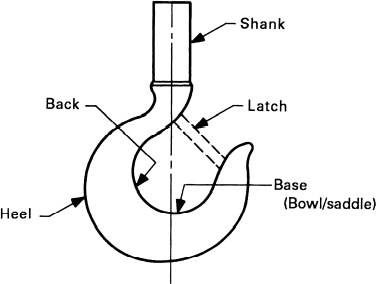
Different Types of Crane Hooks (ASME B30.10)
This page shows the most common crane hook types referenced in ASME B30.10 with images and quick notes.
Use these summaries to understand typical applications and latch styles; always select and inspect hooks per the current standard and the manufacturer’s instructions.
| Crane Hook Types — Images & Notes |
| Hook | Image | Hook | Image |
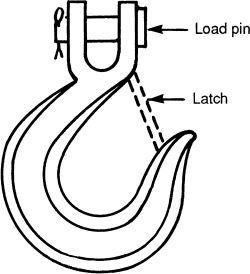
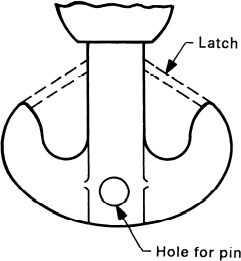
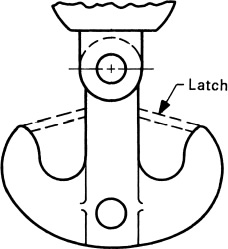
| Clevis Hook (Latch — when required) |
 |
Duplex (Sister) Hook (Latch — when required) |
 |
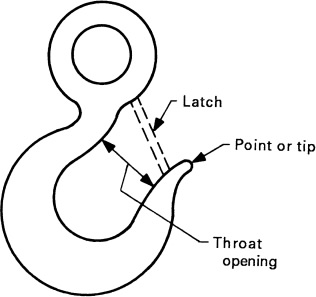
| Eye Hook (Latch — when required) |
 |
Articulated Duplex (Sister) Hook (Latch — when required) |
 |
| Shank Hook (Latch — when required) |
 |
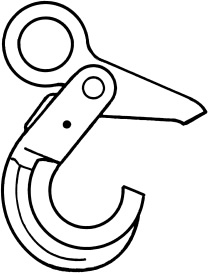
Self-Locking Eye Hook (Open) |
 |
| Self-Locking Clevis Hook (Closed) |
 |
Self-Closing Flapper Latch (Shank Hook) |
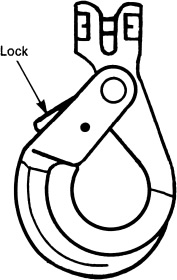
 |
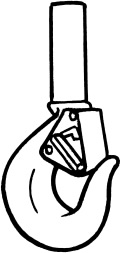
| Self-Closing Bail (Eye Hook) |
 |
Self-Closing Flapper Latch (Swivel Hook) |
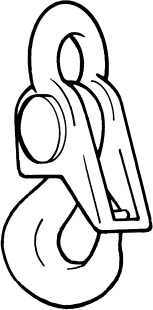
 |
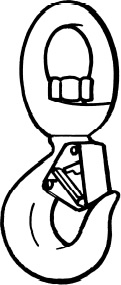
| Self-Closing Gate Latch (Shank Hook) |
 |
Self-Closing Flipper Latch (Eye Hook) |
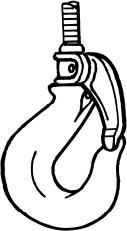
 |
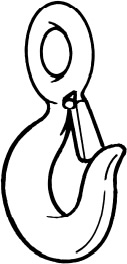
How to Choose a Crane Hook
- Rated load (WLL): Choose a hook whose working load limit meets or exceeds the maximum load, including dynamic factors.
- Connection: Pick eye for permanent sling attachment, clevis for quick pin connection, or shank for custom mounting/blocks.
- Latch style: Self-locking hooks auto-close under load; keepers/flappers provide retention but are not load-bearing.
- Orientation: Use swivel styles to reduce twist when allowed by the application.
- Environment: Consider temperature, corrosion, and required material/finish (e.g., alloy steel, stainless, coatings).
Inspection Basics
- Throat opening: Remove from service if opening growth exceeds the manufacturer’s limit.
- Twist & deformation: Look for permanent twist/bending, especially in the hook body and latch seat.
- Wear: Measure at bearing points (bushing/saddle). Excessive wear is cause for removal.
- Cracks & corrosion: Visual check; use NDE as specified for critical service.
- Latch function: Verify spring and closure; replace damaged latches with approved parts.
- Markings: Ensure WLL, manufacturer, and grade remain legible.
Common Hook Markings
Hooks are typically marked with WLL (Working Load Limit), manufacturer/brand, size/grade, and sometimes a traceability code.
Use only parts with clear markings and documentation.
Safety note: This page is a general reference. Always follow the current ASME B30.10 standard and the hook manufacturer’s instructions for selection, use, inspection, and removal from service.
Supplements
Reference
- ASME B30.10 — Hooks (use current edition)